

Behind the Scenes: Developing the GATE Gamified Learning Framework with AI
Building an engaging and effective gamified learning environment requires much more than good ideas. It involves aligning pedagogical goals, learning content, user needs and technical requirements into a coherent framework that can support learners, educators and administrators alike.
After several weeks of online collaboration, the GATE project partners reached an important milestone. Together, we defined the learning objectives, selected the pedagogical methodologies and developed the initial learning materials that will form the foundation of the GATE gamified learning framework.
The next step took place during our second transnational project meeting at Tampere University of Applied Sciences (TAMK) in Finland. Here, partners from Belgium, Denmark, Germany and Finland worked together to transform educational concepts into a concrete platform blueprint.
From learning design to platform design
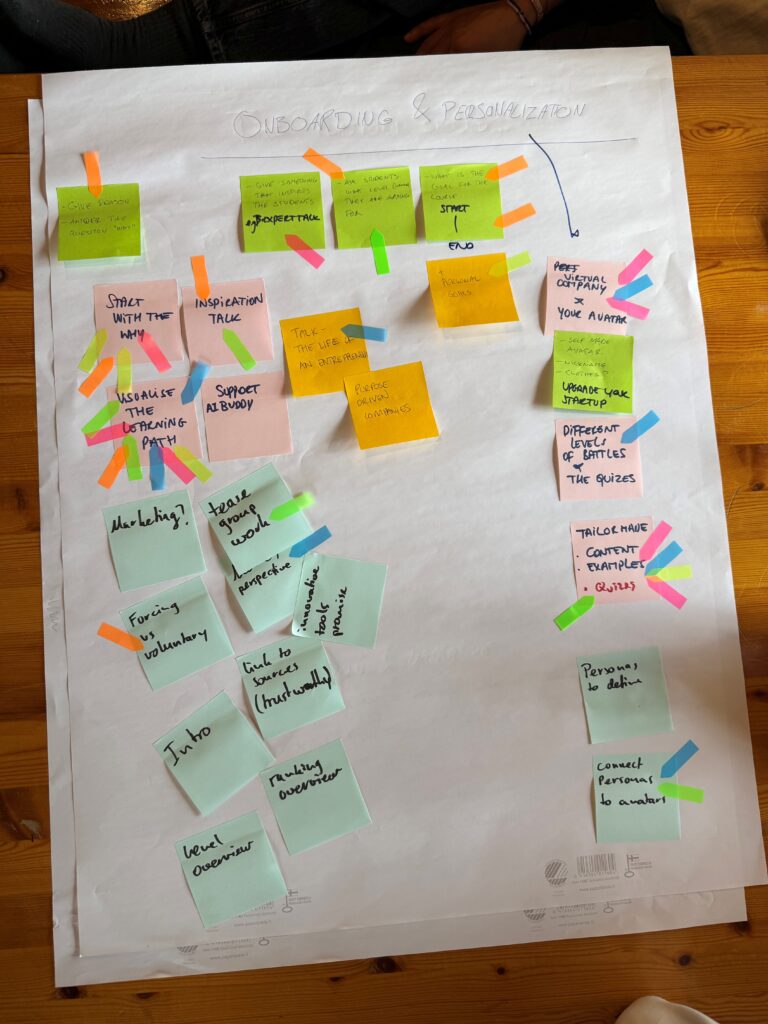
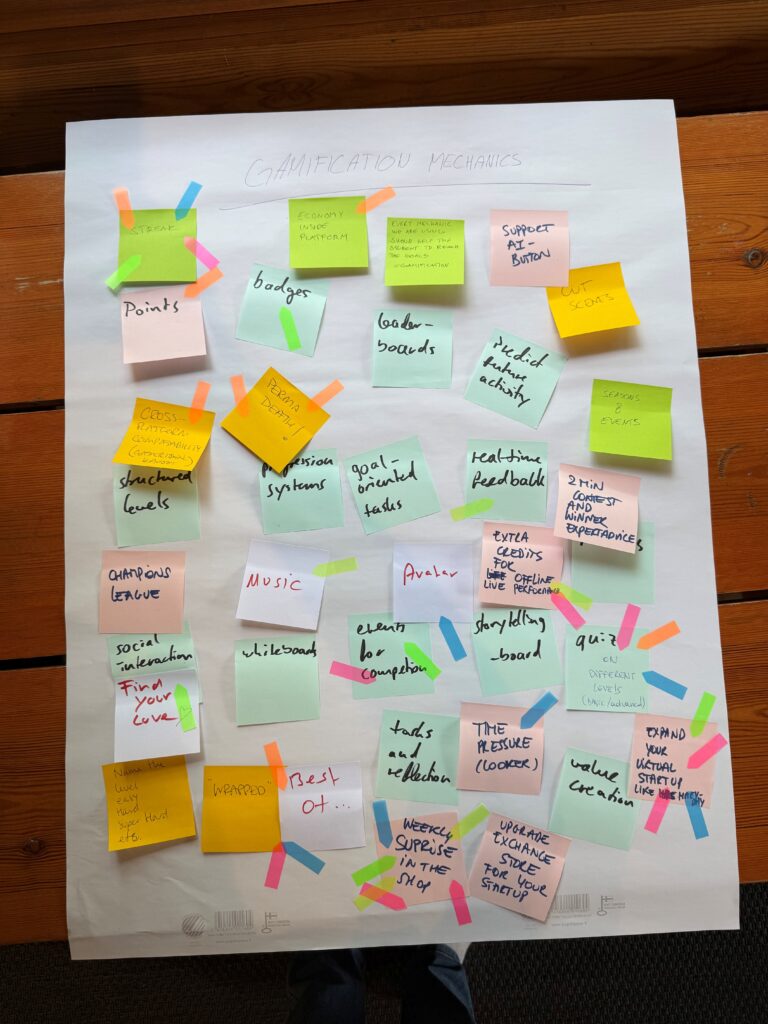
During the workshop, project partners participated in a feature-generation sprint focused on identifying the functionalities that would best support the GATE learning experience. Ideas were generated across five key areas:
- Onboarding and learner orientation
- Weekly learning experiences
- Gamification mechanics
- Community and peer learning
- Teacher and administrator tools
Participants brainstormed features, discussed possibilities and voted on the ideas they considered most valuable. Using a simple voting system with stickers, the group was able to quickly identify which functionalities were considered essential and which could be included as future enhancements.
The outcome was a rich collection of ideas and requirements—but also a large amount of workshop data that would traditionally require hours of manual processing.
Leveraging AI to accelerate the process
To streamline the analysis, we turned to AI technology. Photos of all workshop posters were uploaded to Claude, Anthropic’s AI assistant. Because Claude had already been provided with extensive context about the GATE project—including the platform vision, workshop objectives and pedagogical framework—it was able to go beyond simple text recognition.
Using a single prompt, the AI assistant:
- Read and transcribed handwritten notes from all workshop posters
- Cleaned and organised the collected ideas
- Counted the votes assigned to each feature
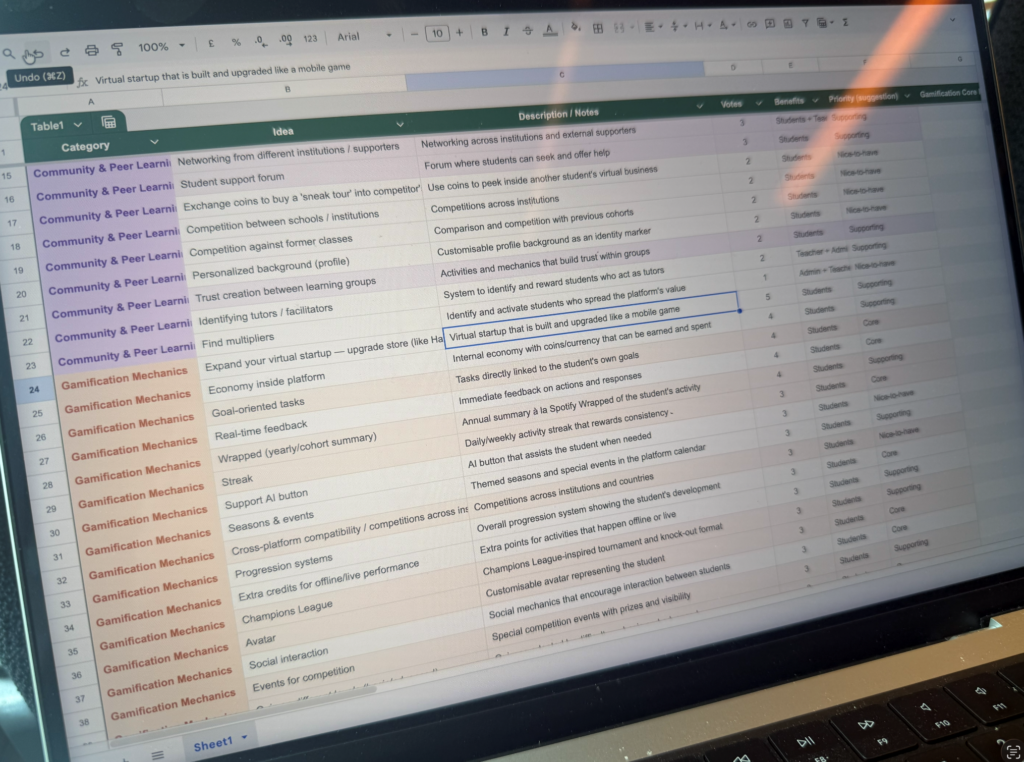
- Structured the information into a spreadsheet format
- Categorised ideas according to their primary beneficiaries (students, teachers, administrators or multiple groups)
- Suggested priority levels based on project objectives and e-learning best practices
Within minutes, the workshop outputs were transformed into a clear, structured and sortable requirements document that could immediately feed into the next stage of platform specification and development.
The prompt:
“I have 5 photos of 5 workshop posters. Participants used small post-it arrow stickers to vote on ideas. Please:
1. Read and transcribe all ideas from each poster, cleaning up the handwriting into clear, readable text. 2. Count the number of vote stickers per idea and add this as a column in an Excel spreadsheet. 3. Add a column indicating who each idea primarily benefits – students, teachers, admins, or a combination. 4. Add a column with a suggested priority classification for each idea: core function, supporting function, or nice-to-have – based on your understanding of the project and e-learning best practices. 5. Organise everything by the category shown at the top of each poster, and apply colour coding per category.
Note: you already have context about this project, the workshop structure and the pedagogical framework from our previous conversation – please draw on this when making your analytical judgements.”
More than automation
What made this approach particularly valuable was not simply the time saved. While AI significantly reduced the administrative workload, it also helped create a structured overview that supported decision-making.
Tasks that would normally require several hours of transcription and a follow-up analysis session were completed almost instantly. This allowed the project team to focus on what matters most: evaluating ideas, making informed decisions and designing a learning platform that meets the needs of its future users.
The experience demonstrated how AI can effectively support collaborative design processes—not by replacing human expertise, but by enhancing it. By combining the creativity and pedagogical knowledge of project partners with the analytical capabilities of AI, the GATE consortium was able to move more efficiently from ideas to actionable requirements.
As development continues, we look forward to sharing more insights into how the GATE framework and platform are taking shape.